The market for renewable energy certificates in Australia is currently in freefall. Prices are dropping like a stone, making the cost of being green much cheaper for your retailer. Make sure it gets cheaper for you, too.
The Australian Energy Market Commission (AEMC) is officially starting its Accelerating Smart Meter Deployment (ASMD) reforms. If you don’t already have a smart meter, you will by the end of 2030.
Have you received an energy bill based on an estimate of your usage? This happens when your distributor can’t read your meter for reasons like unrestrained pets, locked gates, long grass, severe weather events, faulty meter reading equipment, or issues with meter data.
Estimated bills can also be issued if there are interruptions and staffing issues. For example, in Sydney during the COVID lockdowns in 2021, meter reading was paused as a public health precaution, and many households received estimated bills.
This article will cover the basics of estimated bills and what you should do if you receive one.
What is an Estimated Bill?
An estimated bill means that your bill is calculated from on an estimate of your energy usage. This estimate is usually based on your usage during the equivalent period in the previous year.
Estimated bills may be issued if your meter cannot be read due to physical barriers, weather, or technical issues. If your meter cannot be accessed, you’ll continue to receive estimated bills until the access issue is resolved.
How to Tell if Your Bill is Estimated
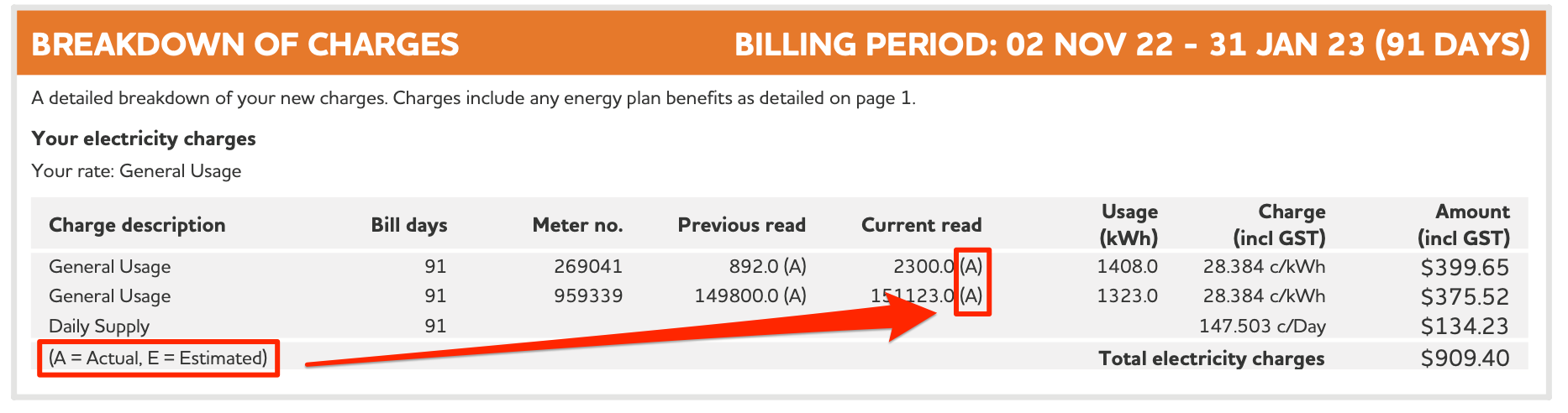
The total charges section of your bill will state whether it is based on an actual or estimated reading. It may appear as either an (A) or (E) after the meter reading numbers, where A stands for actual and E for estimated, or it may show the full words ‘Actual’ and ‘Estimate’.
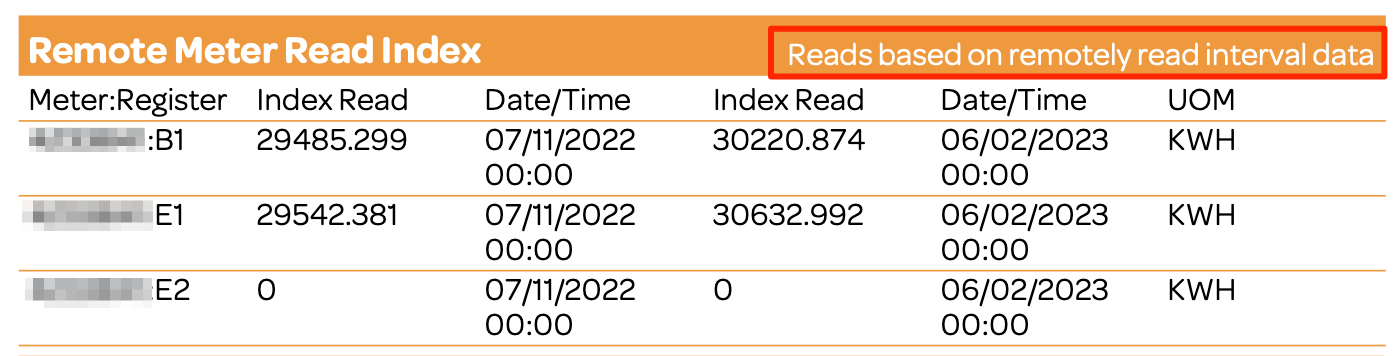
An ‘Actual’ meter read can be displayed with the letter ‘A’, or it may show the full word ‘Actual.’This is an excerpt from an estimated Gas bill from Globird energy.A smart meter typically is read wirelessly over a remote network, which removes the need for estimated reads altogether.
If the meter reader can’t access your meter, they’ll usually leave a card in your letterbox to let you know.
How Your Estimated Bill is Calculated
An estimated bill will usually be based on the consumption data from the last reading in the same period from the previous year. Energy consumption is very sensitive to weather and can change if the appliances in your home are changed, if people have moved in or out, or if your behaviour and habits change. This can result in an under-estimate or an over-estimate of your energy consumption.
If your bill is under-estimated, you’ll receive a larger “catchup bill” on the next bill cycle that is based on an actual reading.
Conversely, if your bill is over-estimated, you’ll have beeen charged for more than you used, and you may end up with a credit on your account when the reconciliation occurs.
What Can You Do if Your Bill is Estimated?
You do not have to accept and pay an estimated bill.
Since October 2018, the rules have allowed energy consumers to request an adjusted bill to be re-issued based on their own meter reading.
AEMC rules now support self-reading of meter if an estimate bill has been issued
Requesting an adjusted bill
Your retailer must re-issue an adjusted bill based on your meter self-reading so long as you provide your self-reading before the bill payment due date and your self-reading meets the retailer’s guidance and requirements.
Before accepting your self-reading, your retailer will check to ensure that the reading you provide is consistent with the numbering format of your meter and is higher than your previous most recent actual read.
If your self-reading is not accepted, the retailer must clearly explain the reason(s) for not accepting it.
How to provide a self-reading
The most common way to provide a self-read of your energy meter is to take a photo of the dials or the display of that meter.
Some retailers may also accept your self-read over the phone or via a self-serve web form.
Most energy retailers have a page on their website with advice on self-reads and may also offer an online submission form.
ℹ️
If you request a re-issued bill and provide a self-read to your energy retailer, the adjusted bill will still display that it’s based on an ‘estimated’ reading. Only official readings taken by the distributor will be shown on the bill as ‘Actual’.
What Happens to Your Next Bill?
When there has been an estimated bill, your retailer may need to adjust the next actual bill, which may result in a credit to your account if the bill was overestimated or a further payment request if underestimated.
If your bill was overestimated and you were charged for more electricity than you consumed, the next reconciliation bill may include negative kWh or MJ consumption data.
Bill Hero will not analyse and report on bills that include negative consumption.
If the estimated bill was under-estimated, the following actual bill might be higher than usual, since it will include the consumption and charges for that billing period, plus the balance of the underestimated charges from the previous p[period, than
What to Do if You Have a Problem with an Estimated Bill
If you have any issues with your estimated bill, the first step is to contact your energy retailer. If they can’t resolve your problem or if you’re still unsatisfied, you can always escalate to your state-based Energy Ombudsman.
Have your say
Got opinions about estimated energy bills? Have your say in the comments, but please first read and understand our Community Guidelines.
The market for renewable energy certificates in Australia is currently in freefall. Prices are dropping like a stone, making the cost of being green much cheaper for your retailer. Make sure it gets cheaper for you, too.
The Australian Energy Market Commission (AEMC) is officially starting its Accelerating Smart Meter Deployment (ASMD) reforms. If you don’t already have a smart meter, you will by the end of 2030.
There is a market-wide price reset that takes effect from 1 July every year. Your switching decisions through this transition depend on a few key factors. Here's a detailed breakdown to help guide your decision.
Savings as a Service is the blog site and newsletter from Bill Hero. Subscribe now and get your energy savings tips and information delivered fresh to your inbox every month.